

Choosing the best legacy board games for groups is harder than any other genre recommendation, because you are not buying a game. You are buying a multi-session commitment that only works if the same people keep showing up. We spent months comparing twelve of the strongest legacy titles on player count, campaign length, session length and how each one behaves when a player cancels.
That last point is the one most roundups skip. A legacy campaign permanently alters the board, the cards and often the rulebook, so a box opened with six friends can be ruined by a social calendar that changes in month two. The right pick depends less on critical acclaim and more on how many people you have, how often you meet and whether your group actually wants to cooperate.
This roundup is filtered by group size first and reputation second, and it is updated for 2026. Every pick below states player count, campaign length and session length, plus who it suits and where it frustrates. We also cover the non-cooperative options in detail, since a large share of legacy releases assume your group wants to lose together.
Table of Contents
- What Is a Legacy Board Game?
- Best Legacy Board Games for Groups by Group Size
- Top 3 Legacy Board Games for Groups (October 2026)
- All 12 Legacy Games Compared for 2026
- 1. Pandemic Legacy Season 1: The Best Starting Point for Most Groups
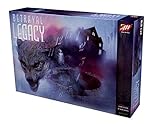
- 2. Betrayal Legacy: Best for a Group That Wants to Tell Stories
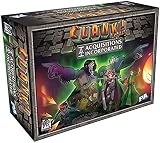
- 3. Clank! Legacy: Acquisitions Incorporated: Best for Groups That Want the Box to Stay Playable
- 4. Charterstone: Best for Six Players and Groups That Dislike Co-op
- 5. Risk Legacy: Best for Four or Five Players Who Want Competition
- 6. My City: Budget Pick and Groups With Fifteen Minutes
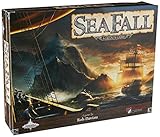
- 7. SeaFall: Best for a Dedicated Four or Five Player Group
- 8. Aeon’s End: Legacy: Best Short Co-op Campaign for Deck-Builders
- 9. Ticket to Ride Legacy: Legends of the West: Best First Campaign for Mixed Ages
- 10. Frosthaven: Best for a Group With Years of Commitment
- 11. Ultimate Werewolf Legacy: Best for Large Gatherings of Nine to Sixteen
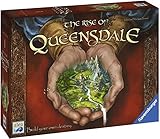
- 12. Rise of Queensdale: Best for Worker Placement Fans on a Budget Component Count
- How to Choose a Legacy Game Your Group Will Actually Finish
- Where Not to Start
- Frequently Asked Questions
- Conclusion: Match the Campaign to Your Calendar
What Is a Legacy Board Game?
A legacy board game permanently changes across sessions. Sticker modifications go onto boards, sealed envelopes and secret boxes open at set moments, new rules and player powers are introduced, and the narrative branches on choices your group made. The campaign you finish is a game that exists for your group alone and generally cannot be replayed without a reset pack.
Best Legacy Board Games for Groups by Group Size
These are the fastest answers, grouped by the size and shape of the table you are planning for.
Best overall: Pandemic Legacy Season 1 for a steady group of two to four who want the genre’s cleanest on-ramp.
Best for 2 players: Charterstone, which scales down to a satisfying solo duel with its Automa, or My City for a couple who wants half-hour episodes.
Best for 3-4 players: Clank! Legacy: Acquisitions Incorporated, short sessions with a narrative arc and a replayable game after the campaign.
Best for 4 to 5 players: Risk Legacy, which fixes classic Risk’s pacing and works best when the whole group turns up.
Best for 5+ players: Ultimate Werewolf Legacy, rated for up to sixteen, and Charterstone at its six-player best.
Best for families: My City, with 15 to 20 minute episodes and a replayable reverse board.
Best short campaign: Aeon’s End: Legacy, a compact multi-session adventure for one to four.
Best for a group that dislikes co-op: Charterstone, Rise of Queensdale and Risk Legacy.
Top 3 Legacy Board Games for Groups (October 2026)

Pandemic Legacy Season 1
- 2-4 players
- 60 minute sessions
- Cooperative area control
- Permanent board changes
All 12 Legacy Games Compared for 2026
| Product | Specs | Action |
|---|---|---|
| Pandemic Legacy Season 1 |
|
Check Latest Price |
| Betrayal Legacy |
|
Check Latest Price |
| Clank! Legacy: Acquisitions Incorporated |
|
Check Latest Price |
 Charterstone Charterstone |
|
Check Latest Price |
 Risk Legacy Risk Legacy |
|
Check Latest Price |
 My City My City |
|
Check Latest Price |
 SeaFall SeaFall |
|
Check Latest Price |
 Aeon’s End: Legacy Aeon’s End: Legacy |
|
Check Latest Price |
 Ticket to Ride Legacy Ticket to Ride Legacy |
|
Check Latest Price |
 Frosthaven Frosthaven |
|
Check Latest Price |
 Ultimate Werewolf Legacy Ultimate Werewolf Legacy |
|
Check Latest Price |
 Rise of Queensdale Rise of Queensdale |
|
Check Latest Price |
1. Pandemic Legacy Season 1: The Best Starting Point for Most Groups
Pandemic Legacy Season 1 Board Game (Blue) – Epic Year-Long Battle Against Deadly Diseases! Cooperative Strategy Game for Family Game Night, Ages 13+, 2-4 Players, 1 Hr Playtime, Made by Z-Man Games
Z-Man Games
2-4 players
60 minute sessions
Cooperative area control
Ages 13 and up
Pros
- Cooperative structure suits a consistent group of 2-4
- Choices permanently alter board characters and rules
- 60 minute sessions fit a regular game night
- Clear learn-as-you-go rule presentation
Cons
- Once the story is finished the box has little standalone value
- Later sessions are more complex than the first ones
- Hidden sealed components mean one experience only
Pandemic Legacy Season 1 is the game most groups end up starting with, and after comparing the twelve titles here it remains the safest first campaign. Z-Man Games built a cooperative area control game where the world degrades month by month, and the group fights four diseases across a twelve-month story.
What makes it work for groups is the session length. Sixty minutes is short enough that a campaign survives a busy month, and the box weighs 4.6 pounds, so it travels to someone else’s house without becoming a project.
The legacy layer is aggressive on purpose. Stickers go onto the board, characters get written on, cards get torn up, and new abilities are unlocked as the story advances. Sealed boxes hide components that permanently transform later sessions, which is why finishing this campaign only happens once.
On a forum thread about first legacy campaigns, one Tekeli.li poster put it plainly: “My first boardgame (legacy) campaign was probably Pandemic Legacy 1 and it was one of the best experiences.” That reaction is the single most common one in the review data too, where 90% of owners gave five stars.
Who this campaign suits
A group of two to four who already meet weekly or fortnightly and want a shared story rather than a one-night game. The 60-minute runtime also makes it the easiest pick for a group with children old enough for the co-op puzzle, at an official age of 13 and up.
Where groups get stuck
Complexity climbs across the campaign as new rules and character powers arrive, so the first few sessions feel simpler than the last. And because sealed components are consumed, a group that loses momentum is left with a permanently altered box. Plan the whole year of dates before you open the first envelope.
2. Betrayal Legacy: Best for a Group That Wants to Tell Stories
Betrayal Legacy (Board Game, Betrayal at House on The Hill)
Wizards of the Coast
Hidden scenarios
New props each session
2.2 pound box
Pros
- Bets you can see coming so drama still lands
- Scenario variety unlocks as the campaign advances
- Strong scare and prop atmosphere in person
- Short sessions fit multiple games into a weekend
Cons
- Designed around a single playthrough
- Scenario setup takes time to explain to newcomers
- Some scenarios are weaker once the group knows the system
Betrayal Legacy takes the haunted-house framework of Betrayal at House on the Hill and lets a dozen sessions of it accumulate. It is the rarest thing in this genre: a legacy game whose value is social rather than mechanical.
The core loop is familiar, which means new players understand it quickly. But hidden scenarios and new components are revealed as the campaign progresses, and the props accumulate. By the fifth session your group has a haunted house full of its own history.
The trade-off is that the base system is intentionally thin, so the story and the table talk carry the experience. Reviewers in the data point to the tension between traitor and heroes as the reason it works, and also note that scenario explanation time grows as new players rotate in.
It is worth mentioning that a well-known ranking listicle in this space includes Regicide Legacy alongside entries like this one, which underlines how wide the definition of legacy has stretched in recent years.
Who this campaign suits
A group of four to six that plays in person and enjoys horror theatre more than optimisation. Reviewers repeatedly credit the atmosphere, and the short sessions mean you can run several games across a weekend and still make progress on the campaign.
Where groups get stuck
Scenario quality varies, and once the group has met the betrayal system, some scenarios land harder than others. More importantly for planning: this is a one-time campaign, so budget your expectations accordingly if your group enjoys replaying.
3. Clank! Legacy: Acquisitions Incorporated: Best for Groups That Want the Box to Stay Playable
Clank! Legacy: Acquisitions Incorporated
Renegade Game Studios
2-4 players
30-120 minutes
10+ game campaign
Ages 13 and up
Pros
- Legacy layer over a fast approachable engine
- Story progression and ability unlocks
- Unique replayable post-campaign game
- Scales from two to four players
Cons
- Base game stays luck-dependent on early map exploration
- Longer sessions once mechanics unlock
- Post-campaign replay is less dramatic than the run
Clank! Legacy: Acquisitions Incorporated wraps a bright dungeon crawl in a climbing narrative where your choices change your story, board and cards. It runs for a 10+ game campaign and is published by Renegade Game Studios, and for groups it is one of the friendliest places to start.
Player count runs two to four, with sessions anywhere between 30 and 120 minutes depending on how much has unlocked. Early games are quick; later ones stretch once new mechanics arrive, which is the single scheduling fact worth checking against your group’s free time.
The standout feature is what happens afterwards. When the campaign ends you keep a unique, fully replayable standalone game built from the decisions you made, and 92% of reviews in the data are five stars with the escalation and readability cited most often. Reviewers also single this out: “The legacy is replayable after the campaign. Fully enjoyable.”
The knock-on cost of that design is a mild carry-over advantage for whoever starts strong, a pattern that shows up in the wider community discussion around leader-heavy legacy games. If your group is sensitive to that, agree on scoring variants before session one.
Who this campaign suits
Groups of two to four who want a campaign with a strong narrative arc but do not want a heavy rules burden. The 2.2 pound box and cardstock, cardboard and wood components also make it an easy game to move between homes or venues.
Where groups get stuck
Luck still decides a lot in the unenhanced base game, particularly during early map exploration, and a casual group can feel the strain of 120-minute sessions later in the run. Agree on session length limits in advance rather than discovering them on a long evening.
4. Charterstone: Best for Six Players and Groups That Dislike Co-op
Stonemaier Games: Charterstone, Competitive Legacy Game by Jamey Stegmaier
Stonemaier Games
1-6 players
75 minute sessions
12 game campaign
Automa solo opponent
Pros
- Exceptional components with metal coins and wooden meeples
- The board you build stays as a one-off worker placement game
- Scales from one to six players with an Automa
- Charming theme with rules that grow gradually
Cons
- A lot to track once new rules arrive each session
- Not intuitive for complete beginners
- Under four players some story beats go unused
Charterstone is Jamey Stegmaier’s village building legacy game, and it is the pick for a big table. It supports one to six players at 75 minutes per session with a five minute setup, across a campaign of 12 games that each add rules, goals and new board areas.
Two things set it apart from every co-op entry here. It is competitive, which makes it one of the few legacy games that works for a group with no interest in cooperating, and it ships with an Automa so a single player gets a real opponent rather than an empty chair.
The component list reads like a designer’s statement: 230+ wooden tokens, 36 metal coins, 350+ unique cards and 75 crates to unlock. After the campaign the board you assembled remains playable as a variable worker placement game, which solves the dead-box problem better than most legacy designs.
On BoardGameGeek, reviewers who dislike cooperative play consistently name Charterstone and other euro-style legacy games as the ones that work for them. It also plays noticeably better at six than at two, so buy it for a full table if you can.
Who this campaign suits
Groups of five or six, established gaming groups that already like worker placement, and anyone who wants a legacy campaign that stays in rotation afterwards. Families looking for a beautiful object on the shelf also rate the production highly.
Where groups get stuck
Bookkeeping gets heavy as rules stack up each session, and the rulebook is not self-explanatory for complete newcomers. Reviewers also note that the scoring system does not clearly signal that campaign success comes from high-value structures rather than winning individual games, which groups often only understand in hindsight.
5. Risk Legacy: Best for Four or Five Players Who Want Competition
Hasbro Gaming Avalon Hill Risk Legacy Strategy Tabletop Game, Immersive Narrative Game, Miniature Board Game for Ages 13 and Up, for 3-5 Players
Hasbro Gaming
3-5 players
About 60 minutes
275+ miniatures
Ages 13 and up
Pros
- Victory point objectives replace multi-hour conquest
- Sealed components and new factions each session
- 275+ miniatures in a briefcase box with a handle
- Scales well to a group of four or five
Cons
- Needs a consistent group as the campaign matures
- Classic alliance dynamics can strain relationships
- Less rewarding for occasional players
Risk Legacy is the definitive conversion of a classic, and it works because it fixes the thing that kept people away from the original. Full-board conquest is replaced by victory point objectives, cutting the game down to roughly an hour for three to five players aged 13 and up.
The campaign is competitive and every session can change the map itself. Rules, cards and stickers enter and go out of play permanently as players win, and locked components are revealed along the way. Over 275 miniatures ship in the box, which weighs 1.8 pounds and has a handle.
This is the pick for a large group that wants a legacy game without a cooperative story to buy into. Among the twelve picks here it has the second-widest player range, and reviewers who grew up with Risk rate it highest for exactly the reason the design changed.
The community question that decides this purchase is scheduling. A well-known r/boardgames thread asks how important it is that the main player group is there for every single game, and the answer for Risk Legacy is more than most: mixing in new players partway through slows campaign development noticeably.
Who this campaign suits
A regular group of four or five that already enjoys competitive area control and can commit to a regular calendar. The briefcase format means it packs and travels better than most games in this list, which matters if you split your sessions across venues.
Where groups get stuck
Classic Risk alliance behaviour survives the conversion and can sour relationships in a group that does not enjoy negotiation. It also rewards consistency more than almost anything else here, so an occasional group will stall before the campaign reaches its good middle stretch.
6. My City: Budget Pick and Groups With Fifteen Minutes
Thames & Kosmos My City | Family – Friendly | Legacy Board Game | Kosmos Games | 2 to 4 Players | Ages 10 and Up | Award Winning Designer Reiner Knizia , Blue
Thames and Kosmos
2-4 players
15-20 minute episodes
24 episode campaign
Ages 10 and up
Pros
- Very short episodes that slot into a weekly routine
- Rules arrive one change at a time
- Reverse board side stays replayable forever
- Catch-up system prevents runaway leaders
Cons
- Too light for hard-core eurogamers
- Episode knowledge carries over after the campaign
- The catch-up system can frustrate players wanting a spread
My City is the legacy game most likely to actually get finished. Reiner Knizia designed it for ages 10 and up, and the campaign runs across 24 episodes of roughly 15 to 20 minutes each. That is the whole pitch: a legacy campaign that survives a household with a bedtime.
It plays two to four, and the components are deliberately modest: four player boards, 96 tiles, 24 cards and 8 envelopes with pieces to unlock. The 1500 gram box is one of the lighter entries here, and the rules are introduced a single change at a time.
After the campaign finishes you flip the board over to the Eternal side and keep playing indefinitely, which removes the dead-box anxiety entirely. Reviewers point to that as the reason the purchase feels permanent rather than consumable, and the family-weight framing works with non-gamer relatives.
The trade-off is tone. It is abstract and low-interaction by design, so a group that wants table talk, bluffing or negotiation will find it flat. The catch-up system also frustrates anyone who prefers a real score spread at the end of each episode.
Who this campaign suits
Families with kids aged ten and up, mixed-experience groups where two players are new to hobby games, and anyone who wants a finished campaign rather than an endless one. My City also works well as a gateway before a group tries something heavier.
Where groups get stuck
Experienced eurogamers tend to finish it and move on, and once you have played the legacy version your knowledge of the episodes gives away the surprises in a replay. If your group wants drama and interaction, this is not the box that provides it.
7. SeaFall: Best for a Dedicated Four or Five Player Group
SeaFall Board Game – Legacy Game of Exploration and Adventure! Strategy Game for Kids & Adults, Ages 14+, 3-5 Players, 90-120 Min Playtime, Made by Plaid Hat Games
Plaid Hat Games
3-5 players
Up to 120 minutes
Ages 14 and up
Non-elimination design
Pros
- No player is knocked out of the campaign
- Island discovery and naming create real narrative
- Three paths to glory let the group specialise
- New mechanics unlock early enough to hold interest
Cons
- Heavy rules and downtime that worsen with more players
- Dice and resource maths need a cheat sheet
- Little value once the campaign ends
SeaFall is a 4X legacy game without player elimination, set in an age of sail where three players can trade, explore or raid. It supports three to five, with five-player games explicitly supported, at up to 120 minutes per session for players aged 14 and up.
The design decision that matters most for groups is that nobody is knocked out of the campaign. Trailing players keep a route back in, which is exactly the property most 4X designs deny you and the reason a five-player table can stay engaged for the whole run.
Narrative comes from choose-your-own-adventure passages in the Captain’s Book, and discovering and naming islands is the part enthusiasts describe as the heart of it. New mechanics unlock early enough that the campaign keeps moving. It also has the lowest average rating in this group of twelve, at 4.2, so expectations matter.
Two practical warnings. The rulebook ships as a digital file and the community Captain’s Log FAQ does real work for groups learning the system, and some sessions run several hours, so this is not a game for a group that wants an hour.
Who this campaign suits
A committed group of four or five with a free evening each month and tolerance for rules weight. The non-elimination structure makes it one of the better options when the table has uneven experience, because a beginner cannot be wiped out and switched off.
Where groups get stuck
Downtime between turns is the standard complaint, and it grows with player count, so do not add a fifth player casually. The winner takes a permanent upgrade each round while losers receive a small bonus, which some groups find unfair, and there is no real post-campaign game to fall back on.
8. Aeon’s End: Legacy: Best Short Co-op Campaign for Deck-Builders
Aeon’s End: Legacy, The First Legacy Deck-Building Game
Indie Boards and Cards
1-4 players
45-90 minutes
Ages 14 and up
80 percent compatible
Pros
- Pioneering legacy design with a tight co-op deck engine
- Campaign choices define the group's own story
- Works with the rest of the Aeon's End line
- Adapts from one to four players
Cons
- Legacy components are consumed during the campaign
- Requires the same committed group throughout
- Complexity ramps up as mechanics are revealed
Aeon’s End: Legacy is the pioneering legacy deck-builder, and it remains the most efficient way to get a group into the genre. It plays one to four at 45 to 90 minutes per session for ages 14 and up, and roughly 80% of the content is compatible with the rest of the Aeon’s End line.
That compatibility is the quiet superpower. A group that finishes the campaign still owns a cooperative deck-builder with a full box of content, rather than a permanently depleted shell, and reviewers consistently single this out as the standout feature.
The campaign is compact compared with the epic entries on this list, which suits a group that wants the format without a year-long commitment. Your choices produce permanent changes and a narrative that only your group sees, and the tight card combat survives the legacy treatment intact.
One player range note: because it supports one to four, it is also a legitimate solo pick, with the solo experience built around a persistent deck that grows across sessions rather than a reset each time.
Who this campaign suits
Couples, groups of three or four, and anyone who plays deck-builders already and wants the legacy layer without a heavy rulebook. It also works as a solo campaign for a single regular player, which is rare at this level of production.
Where groups get stuck
Components are consumed over the campaign, so the box has limited life afterwards. Complexity rises as new mechanics appear mid-run, which can overwhelm a newcomer who joined late, and the whole design assumes the same group shows up from first session to last.
9. Ticket to Ride Legacy: Legends of the West: Best First Campaign for Mixed Ages
Asmodee Ticket to Ride Legacy: Legends of the West Board Game – The Ultimate Train Adventure! Strategy Game, Family Game for Kids & Adults, Ages 10+, 2-5 Players, 20-90 Min Playtime
Asmodee
2-5 players
12 game campaign
13 frontier boards
Ages 10 and up
Pros
- Familiar route claiming lowers the barrier to entry
- 13 frontier boards keep maps fresh
- 280 train cars and 77 postcards
- Works for two to five players aged ten and up
Cons
- One-time campaign with limited use afterwards
- Narrative depth lighter than heavier designs
- Large box for storage and travel
Ticket to Ride Legacy: Legends of the West is the most accessible legacy game on this list, and it is designed by Rob Daviau, Matt Leacock and Alan R. Moon. If your group already knows route claiming, the learning curve is close to flat, which is why it works for two to five players aged ten and up.
The campaign spans 12 games across 13 different frontier board maps, with games running between 20 and 90 minutes depending on how the session goes. Filling your vault unlocks frontier boxes that reveal new rules and content as you go.
The gateway effect is real. On r/boardgames, one family played it over winter break and reported liking it so much more than Pandemic Legacy, and another couple played it and then went looking for other legacy versions. It is the version of the genre that survives mixed-age family tables.
The component count gives the campaign a sense of occasion: 280 plastic train cars, 77 postcards, 84 train cards and 33 tickets. The physical footprint is the drawback, at 17 by 12 by 4 inches, and the narrative sits lighter than the heavier designs.
Who this campaign suits
Families, mixed-age groups, and anyone buying a first legacy game without knowing whether the format will suit their table. Two to five players is a wide range for a competitive campaign, and the familiar engine keeps rules teaching to a minimum each session.
Where groups get stuck
It is a one-time experience by design, and groups that replay competitive games together may find themselves without a follow-up. The box is also the bulkiest relative to playtime here, so check your storage if your sessions move between homes.
10. Frosthaven: Best for a Group With Years of Commitment
Cephalofair Games: Frosthaven
Cephalofair Games
1-4 players
120 minute sessions
130+ campaign sessions
17+ classes
Pros
- Deepest campaign content available in this group
- Card combat with permanent character advancement
- Outpost building and crafting add a management layer
- Cross-compatible with Gloomhaven mercenaries
Cons
- Major commitment in box size and total time
- Steep initial learning curve across many systems
- Rewards a consistent group of up to four
Frosthaven is the ceiling of the campaign format. Cephalofair Games packed in over 130 campaign sessions with 17+ unique mercenary classes, tactical card combat and an outpost building layer with resources, crafting and unlockable buildings. It supports one to four players at around 120 minutes per session.
It is also, bluntly, a logistics decision. The box weighs 31.5 pounds, which is heavier than many people expect, and reviewers describe the combination of systems as a steep initial learning curve. This is the pick for a settled group that plans its year in advance.
If anyone in your group already owns Gloomhaven mercenaries, they cross over in both directions, which is the strongest long-term argument for the box. 85% of reviews in the data are five stars, and the recurring theme is that the scale is both the appeal and the warning.
Treat it as a multi-year project rather than a game. A group that finishes 130 sessions has committed to a schedule that most social calendars cannot absorb, and the ones who thrive are the ones who play regularly at the same place.
Who this campaign suits
A stable group of two to four hobby gamers who already like tactical combat, play weekly, and have storage for a very heavy box. It is also the strongest choice for a group that wants one campaign rather than a shelf of campaign games.
Where groups get stuck
Scale is the whole problem. A 31.5 pound box and 120-minute sessions rule it out for groups that game at different venues, and the number of interlocking systems means a mid-campaign newcomer faces a real learning wall. If your schedule is uncertain, choose one of the shorter campaigns instead.
11. Ultimate Werewolf Legacy: Best for Large Gatherings of Nine to Sixteen
Bezier Games Ultimate Werewolf Legacy Medium
Bezier Games
9-16 players
60 minute sessions
Ages 14 and up
Official licensed release
Pros
- Supports 9-16 players
- rare among legacy games
- Hidden role deduction teaches quickly
- Sixty minute sessions for a mixed group
Cons
- Deduction relies entirely on table dynamics
- Downtime stretches at sixteen players
- Campaign components are consumed over time
Ultimate Werewolf Legacy answers the large group question that every other legacy game dodges. Bezier Games’ officially licensed release supports 9 to 16 players at around 60 minutes per session, for ages 14 and up.
The core game is hidden role deduction, which needs almost no teaching, and the campaign layer adds progression across sessions. For a big gathering that does not want a four-hour tactical slog, there is nothing else in this genre that scales this way.
The honest caveat is that this is a social game wearing a legacy box. It lives or dies on the chemistry of the specific table, and the review base here is the thinnest of the twelve at 97 ratings, so treat consensus enthusiasm as more cautious.
Who this campaign suits
A gathering of nine to sixteen people, including non-gamers, at a single long evening or across a few nights. It is one of the few legacy games where the group size is the feature rather than a compromise.
Where groups get stuck
Sixteen players means noticeable downtime while turns resolve, which can push a session past an hour. Deduction games also fail badly with a table that enjoys tearing each other apart more than solving the puzzle, and campaign components are consumed as the run progresses.
12. Rise of Queensdale: Best for Worker Placement Fans on a Budget Component Count
Ravensburger The Rise of Queensdale for Ages 12 & Up – Legacy Strategy Board Game, Brown
Ravensburger
2-4 players
Ages 12 and up
Intermediate skill
Worker placement legacy
Pros
- Huge component count for what you unbox
- Worker placement base familiar to experienced players
- First epochs act as a tutorial before events arrive
- Rewarding final epoch
Cons
- Core worker placement loop can feel repetitive
- Story and card text are often dull
- Catch-up failed to help players who fell behind
Rise of Queensdale is Ravensburger’s legacy worker placement game for two to four players aged twelve and up, at an intermediate skill level. It is a single playthrough by design, with 450+ counters, 500+ stickers, 120+ cards, 100+ wooden tokens and 21 wooden dice across three boards.
The opening three or four epochs work as a tutorial before events and hurdles arrive, and the conclusion to the final epoch is genuinely rewarding. If your group already enjoys worker placement, the foundation is familiar and the physical modification is thorough.
It also carries the lowest average rating of the twelve at 4.1, on the smallest review base after Werewolf Legacy at 52 ratings. That spread matters: fans of the Pandemic and Gloomhaven shape love the component quantity, while critics find the loop dull and the narrative unengaging.
Who this campaign suits
Groups of three or four who already play worker placement games and want a legacy wrapper without a co-op commitment. The two-player booklet modifications make it easy to run as a pair, though the difficulty drops with them.
Where groups get stuck
The core loop repeats often enough that some players disengage before the campaign opens up, and many cards are never activated in a real playthrough. Reviewers also cite poor rulebook organisation against rival legacy games, and the catch-up mechanic did not rescue players who fell behind.
How to Choose a Legacy Game Your Group Will Actually Finish
Group size is the first filter, and the difference between two and six players is bigger here than in almost any other genre. Charterstone is the only pick that genuinely shines at six, Risk Legacy handles four or five, and Ultimate Werewolf Legacy is the sole option above six.
For groups of five or more players who want a cooperative campaign rather than a party game, accept that you will be choosing between a small number of titles, and pick based on session length. Everything else on this list either caps at four players or stretches past what a casual group enjoys.
Campaign length versus session length is the scheduling calculation most groups get wrong. My City runs 24 episodes of 15 to 20 minutes, Charterstone is 12 games at 75 minutes, and Frosthaven is 130+ sessions at two hours each. A group that meets once a month should count the months before opening the first envelope.
Drop-out tolerance deserves its own question, and it is the one that decides whether a campaign survives. Charterstone’s Automa and My City’s reversible board are the most forgiving options here, while Risk Legacy and Aeon’s End: Legacy both explicitly need the same group throughout. SeaFall’s non-elimination design keeps a trailing player engaged, which helps when experience is uneven.
If your group dislikes cooperative play, the field narrows fast. Charterstone, Rise of Queensdale, Risk Legacy, My City, Ticket to Ride Legacy and Ultimate Werewolf Legacy are all competitive. A BoardGameGeek thread asking for good non-cooperative legacy games is answered with Charterstone more often than anything else.
For solo and mixed-size play, look at Automa support and minimum player counts. Charterstone handles one player properly, Aeon’s End: Legacy supports one to four, and Frosthaven’s solo experience is real but demanding. If your group rotates and you need drop-in drop-out flexibility, tell us if that is your situation and we will narrow it further.
One practical note about portability. If your sessions happen at different venues, weight matters as much as session length: Betrayal Legacy at 2.2 pounds and Risk Legacy at 1.8 pounds travel easily, while Frosthaven at 31.5 pounds effectively needs a home base. For a game night that moves around, pair the shorter campaigns with a box that actually fits in a car, the same kind of practical thinking that shapes our foam board kit reviews, where weight and storage decide whether a hobby survives the walk to the game table.
Where Not to Start
Do not open Frosthaven first. It is the best campaign in this list and the worst introduction to the format, because a steep rules wall plus 130 sessions plus a 31.5 pound box is three commitments before you have played a single card. Learn the genre on My City or Ticket to Ride Legacy.
SeaFall is the other one to approach carefully. It has the lowest average rating of the twelve at 4.2, and its downtime grows with player count, so it rewards a committed four or five player group and frustrates everyone else. If the table is uncertain, choose a competitive euro legacy instead.
Frequently Asked Questions
What is a legacy style board game?
A legacy board game permanently changes across sessions. Sticker modifications go onto boards, sealed envelopes and secret boxes open at set moments, new rules and player powers are introduced, and the narrative branches on choices your group made. The finished campaign is a game that exists for your group alone.
What are the top legacy board games for groups?
Pandemic Legacy Season 1 is the best overall pick for a steady group of two to four, Betrayal Legacy suits groups that enjoy horror storytelling, and Clank! Legacy: Acquisitions Incorporated stays replayable after the campaign. For six players, Charterstone is the answer.
Which legacy board games work for 5 or more players?
Ultimate Werewolf Legacy supports 9 to 16 players at about 60 minutes per session. Charterstone scales to six and plays best there, and Risk Legacy handles four or five with roughly one-hour sessions. Frosthaven caps at four, so it is not a large group option.
How long does a legacy board game campaign take?
It depends entirely on the title. My City runs 24 episodes of 15 to 20 minutes, Charterstone is 12 games at 75 minutes, Ticket to Ride Legacy is 12 games, Risk Legacy and Pandemic Legacy Season 1 run a year of story, and Frosthaven exceeds 130 campaign sessions at around two hours each.
What happens if someone drops out of a legacy campaign?
Legacy games are built for a fixed group, so a drop-out matters most in competitive titles like Risk Legacy, where new players slow campaign development. Pick something with drop-in tolerance if your calendar shifts: Charterstone has an Automa for missing seats and My City’s reverse board remains playable after the campaign ends.
Conclusion: Match the Campaign to Your Calendar
The best legacy board games for groups are the ones your group will finish, so start with player count and session length rather than rankings. Pandemic Legacy Season 1 remains our top pick for a steady group of two to four, Charterstone carries six players and competitive groups, and My City fits families who only have fifteen minutes.
Before you buy, write down your next eight game nights. Check that number against the campaign length, agree who owns the box when a player leaves, and confirm the box fits in the car. Updated for 2026, this roundup covers the twelve legacy games worth a group’s commitment, with the player counts and session times printed plainly so the decision takes an afternoon rather than a decade.