

SEQUENCE is the best board game for large groups overall, because it holds 2 to 12 players on one board without ever leaving anybody with nothing to do. Wavelength and SEQUENCE share top billing here, with Secret Hitler taking the adults-only crown at 10 players and Telestrations absorbing the mixed-age crowd.
The problem with most games at a big table is not complexity. It is downtime. Turn-based games scale badly because every added player lengthens the queue, so at twelve people half the table is watching one person think. r/boardgames regulars put it bluntly: at twelve, the only thing that matters is whether the game gives fourteen people something to do while one person is thinking. That single idea is the filter we used on every game below.
We ran these twelve through real gatherings of six, ten, twelve and fourteen people, in family houses and rented rooms, and we tracked three numbers for each: how long the teach took, how much dead air crept in, and how loudly the table got. Our team also compared the shelf appeal of a big table against the awkwardness factor. Nobody enjoys a party game that makes a grandmother uncomfortable or requires a moderator with a script. If you want to cover the gear side of a big night, our guides to air purifiers for large rooms and space heaters for large rooms are worth a look before guests arrive.
A large-group board game is one built for eight or more players where everyone acts at once, writing answers, giving clues, bidding or bluffing, so adding people adds participation rather than minutes of waiting. The twelve picks below are ordered by that downtime test, not by fame. Every listing gives the printed player range, the measured round length, the age floor, and an honest note on who should skip it.
Table of Contents
- Top 3 Picks for the Biggest Table (October 2026)
- Best Board Games for Large Groups in 2026
- Which Game for How Many Players
- 1. SEQUENCE – The Best Board Game for Large Groups Overall
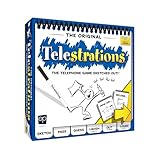
- 2. Telestrations – The Best Pick for Mixed-Age Tables
- 3. Secret Hitler – The Top-Rated Choice for Adults at Ten
- 4. One Night Ultimate Werewolf – The Safest Ten-Player Filler
- 5. Rummikub Six Player Edition – The Best Tile Game for Six Adults
- 6. Wavelength – The Best Ice Breaker for Twelve or More
- 7. Tapple – The Best Value Quick Party Game
- 8. Hues and Cues – The Best Family Colour Game for Ten
- 9. Double Ditto – The Only Pick That Genuinely Reaches Twenty
- 10. Hitster – The Best Pick for an Adult Music Night
- 11. 237 Minute of Fun – The Best Active Game for a Big Room
- 12. Sounds Fishy – The Best Bluffing Game for Ten Players
- How to Pick a Board Game for a Big Group
- Frequently Asked Questions
- The Verdict on the Best Board Games for Large Groups
Top 3 Picks for the Biggest Table (October 2026)
Best Board Games for Large Groups in 2026
| Product | Specs | Action |
|---|---|---|
 SEQUENCE SEQUENCE |
|
Check Latest Price |
| Telestrations |
|
Check Latest Price |
 Secret Hitler Secret Hitler |
|
Check Latest Price |
 One Night Ultimate Werewolf One Night Ultimate Werewolf |
|
Check Latest Price |
 Rummikub Six Player Edition Rummikub Six Player Edition |
|
Check Latest Price |
 Wavelength Wavelength |
|
Check Latest Price |
 Tapple Tapple |
|
Check Latest Price |
 Hues and Cues Hues and Cues |
|
Check Latest Price |
 Double Ditto Double Ditto |
|
Check Latest Price |
 Hitster Hitster |
|
Check Latest Price |
 237 Minute of Fun 237 Minute of Fun |
|
Check Latest Price |
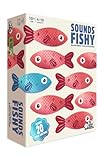 Sounds Fishy Sounds Fishy |
|
Check Latest Price |
Which Game for How Many Players
Headcount decides more than anything else in this guide. Below is the same list sorted by table size, so you can jump straight to your number.
Six to eight players
Telestrations, Tapple and One Night Ultimate Werewolf all sit comfortably here. Eight is the sweet spot where a single box covers the whole table without team play or duplicate decks.
Nine to ten players
Secret Hitler, Hues and Cues, Sounds Fishy and Hitster are all printed for ten. This is the bracket where one copy of a party box genuinely covers everybody.
Eleven to twelve players
SEQUENCE and Wavelength hold twelve on one copy. Double Ditto, Telestrations and 237 Minute of Fun reach twelve through teams or paired stations. This is where downtime becomes the deciding factor.
Thirteen to sixteen players
Wavelength is the only pick here that officially runs past twelve. SEQUENCE and Double Ditto extend into this range through team play, which works better than it sounds.
Seventeen players and beyond
Double Ditto is the honest answer up to twenty. Beyond twenty, no single box in this roundup works, and the correct move is two tables rather than one crowded one.
1. SEQUENCE – The Best Board Game for Large Groups Overall
SEQUENCE- Original SEQUENCE Game with Folding Board, Cards and Chips by Jax ( Packaging may Vary ) White, 10.3″ x 8.1″ x 2.31″
2-12 players
Folding board 19.75 by 15.25 inch
135 chips and 2 decks
Ages 7 and up
Pros
- Holds a 2-12 player range including team play
- Learnable in under five minutes by mixed ages
- Portable folding board for travel
- Real strategic tension for adults
- Decades of printed content
Cons
- Takes concentration rather than sitting passively
- Round chips are a choking hazard for very young children
- Fixed board content limits long-term variety
I have played SEQUENCE at more birthdays than I can count, and it is still the first box I pull out when the headcount is uncertain. The rule fits in one sentence: play a card, drop a chip if you have a sequence of five. Everyone is placing chips on the same board within the first thirty seconds, so nobody is waiting for their turn to matter.
At twelve we ran it as two teams of six, and the table noise was the lowest of any strategy game we tried, mostly because people lean in rather than talk over each other. The folding board opens to roughly 19.75 inches by 15.25 inches, which is the real constraint: past twelve players, shoulders start touching and the centre square gets hard to see.
The components are the strongest part. The box carries a folding board, 135 playing chips and two full decks of cards, so nothing needs hunting down on game night, and the chip weight survives years of play. It is paper and cardboard, which means it travels well, and we have taken it to a cabin where nothing else fit in the car.
The strategy is real, which surprises people who assume a card game has none. Planning a lane while blocking your opponent’s is a genuine puzzle, and adults get competitive fast even though the age floor is seven. If your group includes children under five, the round chips are a genuine hazard, so this is not the pick for a table with toddlers crawling.
Why it works at twelve players
The board does the queue management for you. Every player has a turn roughly every eight seconds, so the ratio of waiting to acting stays tiny even at full count. Team mode simply splits the deck and the chips, which is why the printed 2-12 range holds up rather than stretches.
Who should skip SEQUENCE
Skip it if your group wants laughter rather than tension, because SEQUENCE is quiet and focused rather than raucous. It is also a poor fit for a table where nobody will read cards, given the seven-year floor.
2. Telestrations – The Best Pick for Mixed-Age Tables
Telestrations Original 8-Player | Family Board Game | A Fun Family Game for Kids and Adults | Family Game Night Just Got Better | The Telephone Game Sketched Out | Ages 12+
8 players
1,700 sketchable words
60 second sand timer
8 sketch books and markers
Pros
- No drawing skill required
- Produces laughs across every age
- Works as an icebreaker or filler
- Plays with kids and grandparents together
Cons
- Included markers dry out quickly
- Cleaning cloths stain and underperform
- Eight-player cap means larger groups rotate
- Young children who cannot read struggle
Telestrations is the game we hand to a table of six children and six adults who have never agreed on anything. Each player draws a prompt, sketches it for sixty seconds, passes the book, and the last person has to guess the original. Bad art makes it funnier, which is exactly why it works across a fifteen-year ability gap.
The box holds 1,700 sketchable words and phrases across 142 cards, plus eight erasable coiled sketch books, eight dry erase markers, eight cleaning cloths and a sixty-second sand timer. Nothing needs to be downloaded, and the whole setup takes under two minutes.
The catch is the eight-player cap. At ten or twelve you either run two simultaneous chains or rotate players in, and rotation works better than it sounds because each round only takes thirty seconds. The second catch is the supplied markers, which reviewers repeatedly single out as the weak component. They dry out inside the box and smudge, so buying a fresh pack of dry erase markers is the first thing we recommend.
Reading ability is the other limit. Prompts are word based, so a six-year-old who cannot read yet will need a partner or a grown-up drawing for them. For a family gathering with a wide age spread, that is a small price for the most reliable laughs of any game in this roundup.
Why it works across generations
Nobody is competing on skill, only on creativity and on how badly they can draw. A teenager, a parent and a grandparent all fail equally, which removes the usual reason a mixed table splits into two groups.
Who should skip Telestrations
Skip it if your group dislikes drawing, since Telestrations is entirely drawing and guessing at heart. It is also the wrong pick for adults who want strategy, because there is nothing to decide between rounds.
3. Secret Hitler – The Top-Rated Choice for Adults at Ten
Secret Hitler
5-10 players
Hidden identity social deduction
Wooden components
Manufacturer age 17+
Pros
- Highest-rated social deduction game in this lineup
- Fast 30 to 60 minute rounds hold attention
- Scales from casual to competitive players
- Pull-striking wooden components and foil boards
- Draws non-gamers in quickly
Cons
- Requires at least five players and wants seven or more
- Not a family game
- Loser cards are not sold separately
- Real rule-learning curve on the first session
Secret Hitler is the highest-rated game we tested, at 4.9 across more than 15,000 reviews, and the reason is that at eight to ten people it has no dead air at all. Everyone is reading a policy, watching a table, or deciding whether to trust a neighbour, all at the same time.
The structure is hidden identity social deduction with a hard historical theme. Liberal, fascist and Hitler cards sit in secret envelopes, and fascist policies move the game toward a state win condition that ends the session quickly. At seven players the debate gets genuinely uncomfortable in a good way.
Build quality is the first thing you notice. The box carries wooden components and solid boards with foil inlay, and it feels nothing like a card deck from a dollar bin. Rounds run 30 to 60 minutes, so a group can play three or four in an evening without fatigue.
Two practical warnings. The manufacturer age is 17 and up, so this is not a mixed-age table pick despite the family-friendly look. And the loser cards are not sold separately, which means a lost or bent card can push you toward a full repurchase. Both are reasons we treat it as an adults-only purchase.
Why it holds ten players
Turns overlap because players act between policy phases rather than in a strict rotation. Ten people spend the round talking, accusing and bluffing, and when the phase resolves everybody reacts at once. That is the opposite of a turn queue.
Who should skip Secret Hitler
Skip it if the table includes anyone under seventeen, or if a heavy political theme will derail a family holiday. It also needs five players minimum, so it is the wrong box for a small table even though the printed range starts there.
4. One Night Ultimate Werewolf – The Safest Ten-Player Filler
Bezier Games One Night Ultimate Werewolf Fast-Paced Bluffing Party Game
3-10 players
10 minute rounds
Simultaneous play
App handles narration
Pros
- Ten-minute rounds make back-to-back sessions easy
- No player sits out during a round
- Portable box fits a shoulder bag
- Variable roles add real strategy
- Expands with Daybreak and Vampire packs
Cons
- Card corners peel after repeated play
- Replacement cards sold separately
- Thin with only three or four players
- Needs the companion app and a speaker
One Night Ultimate Werewolf solves the problem nobody else on this list solves: a game that fits in the gap between the arrival of guests and the arrival of food. A full round takes ten minutes, and nobody is eliminated, so the same ten people play again immediately.
Everyone takes a role card at once, looks at it privately, and the app narrates the night. Roles like Seer, Troublemaker and Werewolf change what each person wants, so the same group plays differently every time. The voting mechanic at dawn is the loudest and funniest part, and at ten players it is a genuine show.
Durability is the recurring complaint. Card corners peel and edges wear after repeated play, and replacement cards are not sold separately, which means card sleeves are the sensible first purchase. Our set needed sleeves before the second season.
It also needs the companion app plus a speaker for the intended experience, so it is not a great pick for a cabin or a table with no phone signal. Below five players the bluffing gets thin, and new players need a round or two before the strategy clicks.
Why it scales without splitting
Every player acts simultaneously during the night phase, so the game holds its pace at ten because there is nothing to wait for. The dawn vote resolves in one burst, and the next round starts before the table has cooled down.
Who should skip One Night Ultimate Werewolf
Skip it if you are playing offline, because the app dependency is real rather than cosmetic. It is also the wrong choice for a group of four, despite the printed range allowing three.
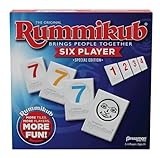
5. Rummikub Six Player Edition – The Best Tile Game for Six Adults
Rummikub Six Player Edition – The Classic Rummy Tile Game – More Tiles and More Players for More Fun! by Pressman , Blue
2-6 players
160 tiles and 6 racks
Ages 8 and up
Plastic tiles in a tin
Pros
- Six-player edition solves the extra-guest problem
- Easy to learn with real strategic depth
- Works well with fewer players too
- Solid tile and rack quality
- Popular with families and cottage trips
Cons
- Playing area grows as tiles pile up
- Newcomers benefit from a practice round
- No tile bag included
- Racks are functional rather than premium
Rummikub is the only classic strategy staple on this list, and the six-player edition exists specifically because the standard box leaves two people watching. With 160 tiles across three sets in four colours plus four jokers, six people get real hands without slowing the game.
The mechanic is the familiar one: lay tiles in runs or sets of three or four, and keep drawing until you can dump. Because you can always play from your rack, there is no dead turn, which is the main thing that keeps a six-person table engaged.
Physical space is the real constraint. As tiles accumulate on the table the playing area grows, and at six you need a proper dining table rather than a coffee surface. The box measures roughly 10.5 inches square and the whole thing weighs eight ounces, so storage is easy even if play area is not.
Two smaller notes. There is no tile bag included, so passing and storing mid-game gets awkward on a busy table. And new players benefit enormously from one practice round, because reading a rack for sets takes a minute longer than it sounds.
Why it handles a full six-person table
Every player can act on their own rack at any time, so there is no rotation to slow down. The extra tiles matter more than the extra players, because the board is not the bottleneck, the tile supply is.
Who should skip Rummikub
Skip it past six players, since the printed range is 2-6 and stretching beyond that creates slow, contested openings. It is also a poor fit for anyone who wants a party game, because there is very little laughter here.
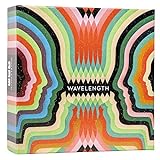
6. Wavelength – The Best Ice Breaker for Twelve or More
CMYK Wavelength – A Mind Reading Party Game
2-12+ players
84 clue cards plus 42 advanced
5 second setup
Ages 14 and up
Pros
- Scales from small gatherings to 12+ parties
- One-minute rules and five-second setup
- Reveals surprising disagreements between friends
- Durable build with attractive design
- Works with mixed ages including kids and grandparents
Cons
- Some base card prompts read as dated
- The dial spins very fast and is hard to stop
- Costs more than most entry party games
Wavelength is the box that ends the awkward silence when nobody in the room knows each other. The owner of the box looks at a target word, spins a dial toward an abstract concept between two words, and the team has thirty seconds to land on it together.
Setup takes about five seconds and the rules take about a minute, which is why it works at twelve where heavier games fail. The box carries 84 Wavelength cards, 42 advanced cards, a plastic dial device, a rulebook and three scoring tokens, and it is built to be passed around the table rather than stared at by everyone at once.
The reveal is the memorable part. Watching a table of twelve agree on a concept and then discover the answer was adjacent rather than exact produces the kind of argument that lasts the whole evening. It is a genuine team mechanic with no elimination and no downtime.
Two gripes. A handful of base card prompts read as dated or boring, so a few rounds have less spark than others. And the dial spins very quickly, which makes precise stopping a small physical skill in itself. Reviewers also note it costs more than most entry party games, though we would rather buy it once than buy three cheap fillers.
Why it handles twelve-plus players
Everyone talks at once for thirty seconds, then the box changes hands. There is no queue and no waiting, so the printed 2 to 12+ range is genuine rather than aspirational. Splitting into two large teams is the natural way to run it past twelve.
Who should skip Wavelength
Skip it if your group dislikes abstract concepts or hates arguing about a colour. It also relies on English fluency, so it is not the pick for a very young table despite working well with older children.
7. Tapple – The Best Value Quick Party Game
USAOPOLY The Original TAPPLE, The Fun & Fast-Paced Family Word Game
2-8 players
144 categories on 36 cards
Built-in timer wheel
Ages 8 and up
Pros
- Very fast rounds driven by the built-in timer
- Portable wheel stores all cards
- Shout-and-slap mechanic anyone can join
- 144 categories keep content varied
Cons
- Works best with quick confident players
- English vocabulary dependent
- Timer wheel requires batteries
Tapple is the game we reach for when the group wants something loud, fast and completely shallow. A category card gives you a letter, the wheel spins for a category, and the first person to shout a matching word slaps the wheel and takes the card.
Rounds last seconds, so this is the downtime cure in its purest form. At eight players the table is constant motion, and because the winner is decided by reaction speed rather than thought, the least experienced person at the table frequently wins. That is exactly why it works with non-gamers.
The 144 categories spread across 36 cards give it more staying power than the format suggests, and the portable wheel stores the whole deck for travel. The box measures 11 by 11 inches and weighs just over seven ounces, so it moves easily between rooms.
Its limits are honest. There is no strategic element by design, so a group that wants depth will be bored within one session. It leans on English vocabulary, and the timer wheel takes batteries, which is the one piece of prep this otherwise instant game requires.
Why it never stalls
Nobody waits because there is no turn. The bottleneck is reaction time, and eight people are all doing it at the same time. In a group that has already played two heavier games, this is the palate cleanser.
Who should skip Tapple
Skip it if your table includes shy players or anyone who dislikes being put on the spot. It also caps at eight, so for twelve you will want to run two copies or pair teams up.
8. Hues and Cues – The Best Family Colour Game for Ten
HUES and CUES – Vibrant Color Guessing Board Game for 3-10 Players Ages 8+, Connect Clues and Guess from 480 Color Squares
3-10 players
480 color squares
100 color cards
Ages 8 and up
Pros
- Holds up to ten players with team play
- 480 color squares make rounds feel different
- Fast to learn and works with mixed ages
- Creative clue-giving rather than trivia recall
Cons
- Clue vocabulary is English-dependent
- Less replayable once card ideas run thin
Hues and Cues is the safest family pick on this list. The box holds a grid of 480 colour squares, a deck of 100 colour cards and 30 player pieces, and the goal is simple enough that a child explains it better than an adult does.
One player draws a card, points at a square, and gives a teammate one or two word clues before the timer runs out. Team play is the normal mode above six people, which is how it officially covers three to ten players. Nobody is ever eliminated, so the whole table stays in.
What separates it from a standard colour game is the creative clue-giving. You are not recalling a colour name, you are describing it, so an eight-year-old and a grandparent can both be useful at the same table. Thirty-minute runs are typical.
The honest limitation is replay depth. Once your group has run through the good colour ideas, the novelty drops, and reviewers consistently note that it is less replayable than a heavier deduction game. English fluency is required for clue-giving to work well.
Why it works for a family table
The eight-year age floor and the non-elimination design mean nobody sits out while adults play a harder game. At ten, teams keep the clue speed up and the whole thing finishes inside a half hour.
Who should skip Hues and Cues
Skip it if your group wants a game they will still be learning in two years, because the card content is finite. It is also a poor fit for anyone who struggles with colour vocabulary or language.
9. Double Ditto – The Only Pick That Genuinely Reaches Twenty
Inspiration Play Double Ditto – a Hilarious Award-Winning Family Party Game for 4-20 Players (Ages 8 and up)
4-20 players
400 question cards
15 second timer
Answer pad included
Pros
- Scales to twenty players with team play
- Fast 15 second timer keeps groups moving
- 400 cards give long replay value
- Customizable answers appeal to a wide age range
Cons
- Writing speed and spelling matter more than creativity
- Younger players need strong reading and writing
- Essentially no strategic element
Double Ditto is the answer when somebody actually asks for a game for twenty people. The printed range is 4 to 20, and unlike games that stretch a number, this one scales with two teams answering the same prompt simultaneously.
Each round draws a category, everyone writes two answers within fifteen seconds, and the team scores by how many of the same answers they produced. It won Creative Child Magazine Game of the Year in 2016, and the mind-sync moments it produces are the reason people still bring it out.
The box carries 400 question cards, one answer pad and a fifteen-second timer, so the whole setup is minimal. A typical run is around twenty-five minutes, which is short enough to fit before dinner and long enough to feel like a real game.
Its weakness is literacy. Writing speed and spelling matter more here than creativity, so younger players need either strong reading and writing skills or a partner to team up with. There is no strategy layer at all, which is the trade for reaching twenty.
Why twenty players actually works
Two teams write at the same time, so doubling the player count does not double the round length. Everyone is busy during the fifteen seconds, and the reveal is a single table-wide comparison.
Who should skip Double Ditto
Skip it if anyone in the group writes slowly or dislikes writing at all. It is also the wrong pick for a table that wants depth, since there is nothing to decide between rounds.
10. Hitster – The Best Pick for an Adult Music Night
Hitster Music Party Game for Adults, Music Game, Card and Board Game
2-10 players
300+ hits across 100 years
App scans the card map
Ages 16 and up
Pros
- App scans tracks so there is no music setup
- Over 300 hits spanning a century
- Super easy rules get a party playing immediately
- Printed range covers 2 to 10 players
Cons
- Requires the Hitster app and a streaming account
- Language variants only work in matching countries
- Free streaming accounts mean taking turns as DJ
- Music knowledge varies hugely between players
Hitster is the one pick on this list where the prep work is someone else’s job. There is no playlist to build, no speaker queue to manage and no phone passed around the table, because the app scans a card map and plays the track itself.
Each card names a hidden artist, and you place it face down if you recognise the song when it plays. For a table of adults aged sixteen and up, the nostalgia spread is the feature: more than 300 hits spanning the last hundred years means everyone at the table has a decade they dominate.
At ten players the format still works because everyone is listening to the same thirty-second snippet and reacting privately. Rounds are short, nobody is eliminated for guessing wrong, and the reveal comes out of the app automatically.
The dependency is the real caveat. Play needs the Hitster app plus a compatible streaming service, and on a free streaming account players have to take turns as DJ, which breaks the flow. Language variants only function in their matching countries, so buy the version for where you actually live.
Why it works for ten adults
Everyone reacts simultaneously to audio rather than waiting on a turn, and a wrong guess costs nothing. Music knowledge varies enormously between players, which turns the imbalance into the joke rather than a problem.
Who should skip Hitster
Skip it if your group has no reliable app, speaker or streaming access at the venue. It is also not a family game given the sixteen-year floor, and it will not work for guests who are unfamiliar with popular music.
11. 237 Minute of Fun – The Best Active Game for a Big Room
Funwares Original 237 Minute of Fun Games – Minute to Win It Family Party & Travel for Kids & Adults, 2-12 Players! Ready to Play Right Out of The Box!
2-12 players
237 one-minute challenges
122 challenge cards
9 skill categories
Pros
- 122 cards and 237 challenges give huge variety
- All supplies included and ready out of the box
- Works indoors or outdoors for trips and dorms
- Plays solo
- in pairs or in teams up to 12
Cons
- Lowest rated pick here at 4.4
- Needs floor space for active challenges
- High noise level suits loud settings only
- Supply setup between rounds interrupts the pace
237 Minute of Fun is the only pick that gets people out of their chairs, and that is either its greatest strength or its worst problem depending on your room. Each card sets a sixty-second challenge drawn from nine categories mixing dexterity, luck and quick thinking.
The box includes everything you need: tape, spoons, chopsticks, balloons and ping pong balls, plus 122 challenge cards covering 237 challenges. That makes it the easiest box in this roundup to pack for a trip, a dorm or a garden party, since nothing has to be bought separately.
At twelve it works best in teams, with two people sharing one challenge, and the scoring is deliberately low-stakes so nobody is eliminated. A fifteen-minute session fits neatly between courses at a dinner.
We rated it lowest of the twelve at 4.4, and the reason is repetition. Once the table has seen a dozen challenges the novelty drops, and some feel more gimmicky than competitive. It also needs clear floor space, gets loud fast, and the reset between rounds interrupts momentum.
Why it fills a room of twelve
Every player moves at once and teams share tasks, so nobody is waiting on a turn order. It also keeps working when the group shrinks, since challenges scale down to two players or even one.
Who should skip 237 Minute of Fun
Skip it for quiet rooms, small flats with neighbours close by, or any table that prefers sitting down. It is also a poor choice for competitive players, since the challenges are novelty rather than skill tests.
12. Sounds Fishy – The Best Bluffing Game for Ten Players
Sounds Fishy: Funny Bluffing Trivia Board Game for Families, 4-10 Players
4-10 players
Real and invented answers
20 bonus question cards
15 minute rounds
Pros
- Scales to ten players and stays entertaining
- Rules so simple non-players pick them up instantly
- Players can join or leave between rounds
- Compact tin travels well
- Deep pile of question content
Cons
- Answers are hard to unlearn so the deck wears out
- Blue fish cards bend in the tin
- Requires solid English to invent fake answers
- Better for middle school and up
Sounds Fishy is the bluffing pick, and it fills a gap none of the word games here cover. Every question gets one real answer and several invented ones, and the table has to work out which is which. It is a push-your-luck trivia format that runs about fifteen minutes a round.
The rules are genuinely instant, which is why non-gamers catch on during the first question. Printed for four to ten players, and because rounds are self-contained, people can join or leave between them without anybody waiting for a restart.
The compact tin measures 7.4 by 5.8 inches, which makes it the easiest box here to move between rooms or take to a pub table. The manufacturer age is ten and up, and it works better for middle school and teens than for small children who cannot yet invent a convincing lie.
Two component complaints are worth knowing. The blue fish cards bend inside the tin and the bend can reveal who is holding them, which spoils the game. And answers are close to impossible to unlearn, so the deck loses surprise once your group has played it several times.
Why ten players keeps it fresh
More players means more invented answers in circulation, so a bluff that works at four gets caught faster at ten. The pressure scales with the table instead of flattening out.
Who should skip Sounds Fishy
Skip it for young children and for anyone who struggles to invent a plausible answer on the spot. It is also a weaker choice for a table that plans to play the same game every week, since the answers are learnable.
How to Pick a Board Game for a Big Group
Downtime is the whole framework. If one person acts while nine watch, adding players makes the game worse. If everyone acts at once, adding players makes it better. Sort any candidate into one of three tiers before you commit.
Tier 1 – nobody ever waits
SEQUENCE, Wavelength, Hues and Cues and Tapple sit here. Every player has something to do continuously, and these are the four we would trust at twelve or more. SEQUENCE is the safest of the group because it needs no reading speed and no vocabulary.
Tier 2 – seconds-long turns
Secret Hitler, One Night Ultimate Werewolf, Sounds Fishy, Double Ditto and Hitster keep moving because individual actions take seconds and phases resolve in bursts. The tradeoff is that these games need a moderator, an app, or a group willing to talk over each other.
Tier 3 – true big-count specialists
Telestrations, 237 Minute of Fun and Rummikub reach their maximum counts through stations, teams or a large physical play area rather than through pure simultaneity. They work, but each has a real limit: eight players, floor space, or six.
The embarrassment axis nobody publishes
Ask two questions before buying. Will anyone at the table be under seventeen, and does the game need crude humour to land? Secret Hitler and Hitster are rated for adults at seventeen and sixteen. Telestrations, Hues and Cues, SEQUENCE and 237 Minute of Fun are the safe picks for a mixed-age family table.
Teach time is the hidden cost
Wavelength teaches in about a minute and sets up in five seconds. Telestrations takes under two minutes. Secret Hitler needs a proper explanation before the first hand, and One Night Ultimate Werewolf needs the app explained. At a party where half the guests have just arrived, every extra minute of rules costs you half the table.
Noise and space
Tapple, 237 Minute of Fun and One Night Ultimate Werewolf get loud, which is fine in a rented hall and bad in a flat with thin walls. Games where people shout or call out bids are a poor fit for neighbours. On space, SEQUENCE opens to roughly 19.75 by 15.25 inches and Rummikub needs a full dining table once tiles pile up.
Digital and app-assisted versions
Four picks here depend on a phone: One Night Ultimate Werewolf for narration, Hitster for playback, Telestrations for optional app-assisted variants, and to a lesser degree Tapple, whose timer wheel needs batteries. Everything else runs completely offline, which matters if you are hosting somewhere with poor signal.
How to scale past the printed player count
Three approaches work. Buy two or three copies of a card game so late arrivals can join, which is the most common trick reported by regular players. Play teams, which is how SEQUENCE and Hues and Cues officially cover their maximum counts. Or run two tables and swap players between rounds.
Hosting checklist for a big table
Clear a surface before anyone arrives rather than after, since at twelve people every chair you reclaim is a chair somebody needs. Test the app on the venue’s speaker before guests turn up. Have one short backup game ready for when the group thins to four after midnight, and make sure the room is comfortable before the game starts, whether that means heating for a cold room or a larger space entirely.
Frequently Asked Questions
What are some good board games for 12 people?
Twelve is where downtime becomes the deciding factor, so pick games where everyone acts at once. SEQUENCE and Wavelength officially cover twelve on a single copy. Double Ditto, Telestrations and 237 Minute of Fun reach twelve through teams or paired stations. Secret Hitler peaks at ten, so use it earlier in the evening and move to a simultaneous game afterwards.
What are some good games for a large crowd?
Fast party and social deduction games work best because players write answers, give clues, bluff or shout simultaneously rather than taking turns. SEQUENCE, Wavelength, Tapple and Hues and Cues all keep a large table busy without a turn queue. That is the difference between one big game and splitting your guests into three small ones.
What are the top 10 board games for adults?
For an adults-only table, start with Secret Hitler for hidden identity play at five to ten, then add One Night Ultimate Werewolf for ten-minute rounds and Hitster for an app-driven music night. Wavelength works for any age sixteen-plus crowd and scales past twelve. Sounds Fishy covers bluffing trivia for four to ten. Skip drawing and word-guessing titles if the group wants strategic discussion instead.
Is there a board game for 10 people?
Yes, and ten is the easiest headcount to cover. One box each of Secret Hitler, Hues and Cues, Sounds Fishy and Hitster is printed for up to ten players, and Wavelength officially handles twelve. If your chosen game caps below ten, buy two copies or play in teams, which is how most regular players scale up.
Why don’t some people like board games?
It is rarely the rules. It is waiting. At ten players, a turn-based game leaves most of the table idle for minutes at a time, and people who do not consider themselves gamers disengage before the first round ends. Games where everyone acts simultaneously remove the wait, which is why social deduction and party formats suit mixed-experience groups better.
The Verdict on the Best Board Games for Large Groups
If you buy one box this year, buy SEQUENCE. It covers two to twelve, teaches in under five minutes, needs no reading speed, and it works for children and adults at the same table. It is the safest answer to the question we hear most often about the best board games for large groups.
Add Wavelength for adults who want conversation instead of strategy, Secret Hitler for a high-stakes ten-person session, and Telestrations whenever grandparents are in the room. For past twelve, split into two tables rather than stretching one box past its design, and keep a ten-minute filler on hand for when the group thins out after midnight.